The Past Is Not the Future
The mathematicians' not-equal sign, pulled into two arrows. What happened is not what happens next.
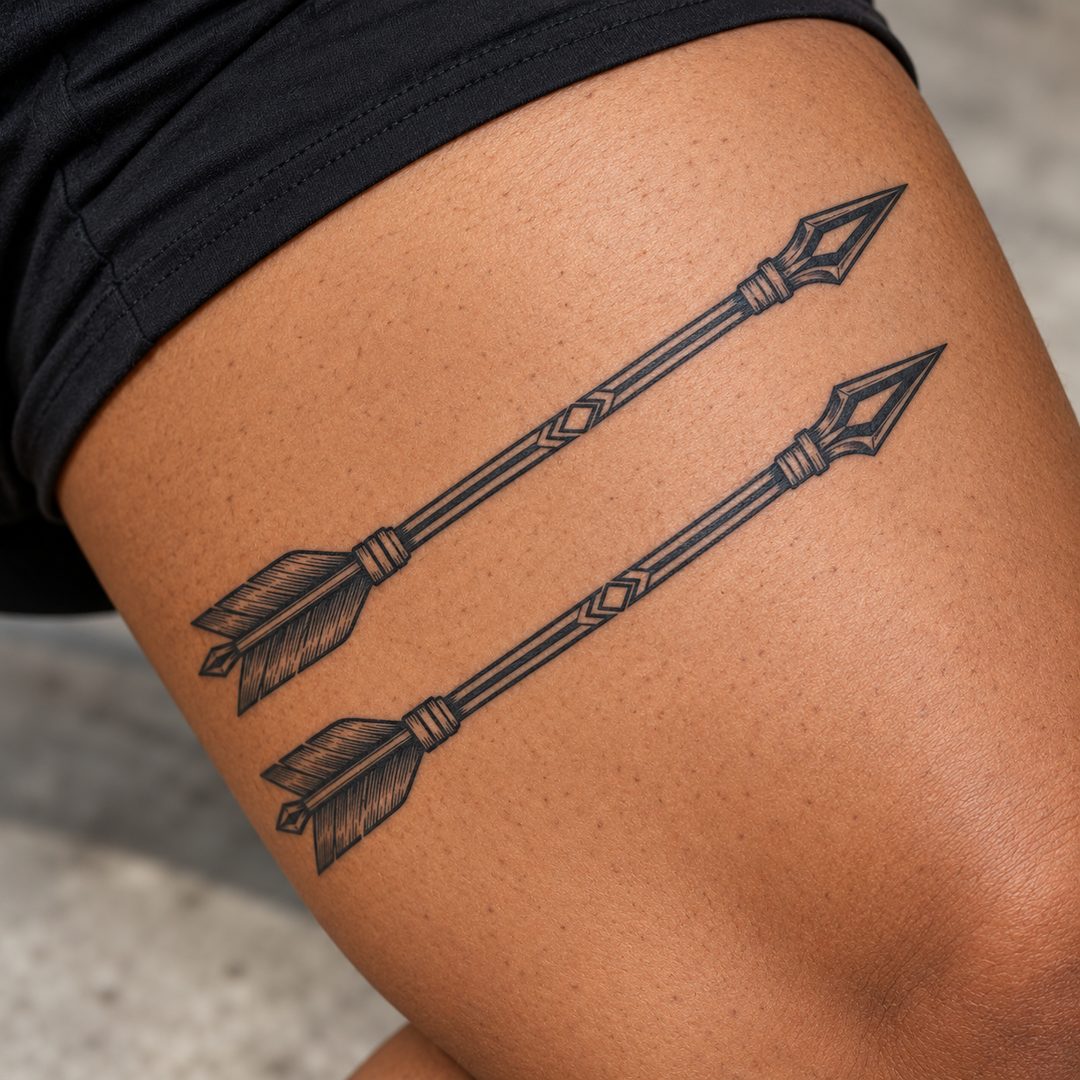
Mathematicians have long struck a line through the equals sign to say two things are not the same. In the 1990s the speaker Tony Robbins gave the idea a sentence people carried home: the past does not equal the future. Somewhere along the way the two bars became arrows, one pointing back and one pointing forward, and the sign turned into a promise. It is often the first tattoo after a hard year. The slash is the decision.
The story
The sign itself is borrowed from mathematics: an equals sign with a stroke through it, meaning two things are not the same. Tattoo versions turn the two bars into arrows, one pointing back and one pointing forward, so the sign reads as a sentence: the past does not equal the future.
That sentence is usually credited to the American speaker Tony Robbins, who used it through the 1990s as a line for people trying to change course. It travelled the way such lines do, onto posters and then onto skin, and the arrow version is now one of the most common small geometric tattoos.
It is worn after the kind of year you do not want to repeat: an illness, a loss, a habit broken. Nobody needs the sentence explained, which is part of the appeal. The mark is quiet and the meaning is private until you choose to say it.
What it means
- Mathematics
- Not equal. Two things that are not the same.
- Modern
- You are not what happened to you. The next chapter is unwritten.
Best place to wear it
Inner forearm Top pick
Flat, stable skin for straight lines, and you see it yourself.
3 to 6 cm wide
Pain 3/10 · heals in about 14 days
Outer forearm
Reads along the arm as an arrow should. More sun, so keep the bars solid.
4 to 7 cm wide
Pain 3/10 · heals in about 14 days
Collarbone
A small version tucked under the bone. Lines stay straight here.
3 to 4 cm wide
Pain 7/10 · heals in about 14 days
Get it right
This is a geometric mark, so it lives or dies on straight lines and even spacing. Ask for the two bars to be the same weight and the slash to cross both at the same angle; a slash that clips only one bar reads as a mistake. Keep it 3 cm or wider so the arrowheads stay sharp; at 2 cm they soften into blobs within a few years. Bold, solid bars age better than thin outlined ones. It sits naturally along a limb, arrows pointing the way the arm goes.
Styles that suit it
Related
Sources
Researched from the sources below; cultural review pending.