Sak Yant
Thai sacred tattoos, given by monks and masters with a blessing and rules. A copy is not one.
Closed practice
The story
Sak yant, or yantra tattooing, comes from the Khmer Empire of around the ninth century and lives on in Thailand, Cambodia, Laos and Myanmar. Sak means to tap; yant is the sacred geometry. The designs are grids, spires, animals and deities, written through with Khom script, an old Khmer alphabet used for sacred text. The best known are the hah taew, five lines of script; the gao yord, nine spires at the nape of the neck; and the paed tidt, eight directions of protection.
What makes a sak yant is not the picture but the giving. A monk or an ajarn, a lay master, taps it in by hand with a long rod while chanting, then blesses it. The master chooses the design and where it goes, and higher on the body is holier: the gao yord sits at the top of the spine, and nothing sacred goes below the waist. In return the wearer keeps rules, usually the Buddhist precepts against killing, stealing, lying, sexual misconduct and intoxicants, plus rules the master sets. Break them, and the tattoo is said to lose its power.
Temples such as Wat Bang Phra now tattoo foreigners too, and a Hollywood actress's hah taew made the style famous. That fame is where the trouble starts: a sak yant design copied off the internet by a studio artist is a drawing of a blessing, not the blessing.
What it means
- Thai Buddhist and animist
- Protection, charisma, good fortune, invulnerability, each design its own.
- Khmer
- The tradition's origin. Soldiers wore yantras into battle.
- Tattoo world
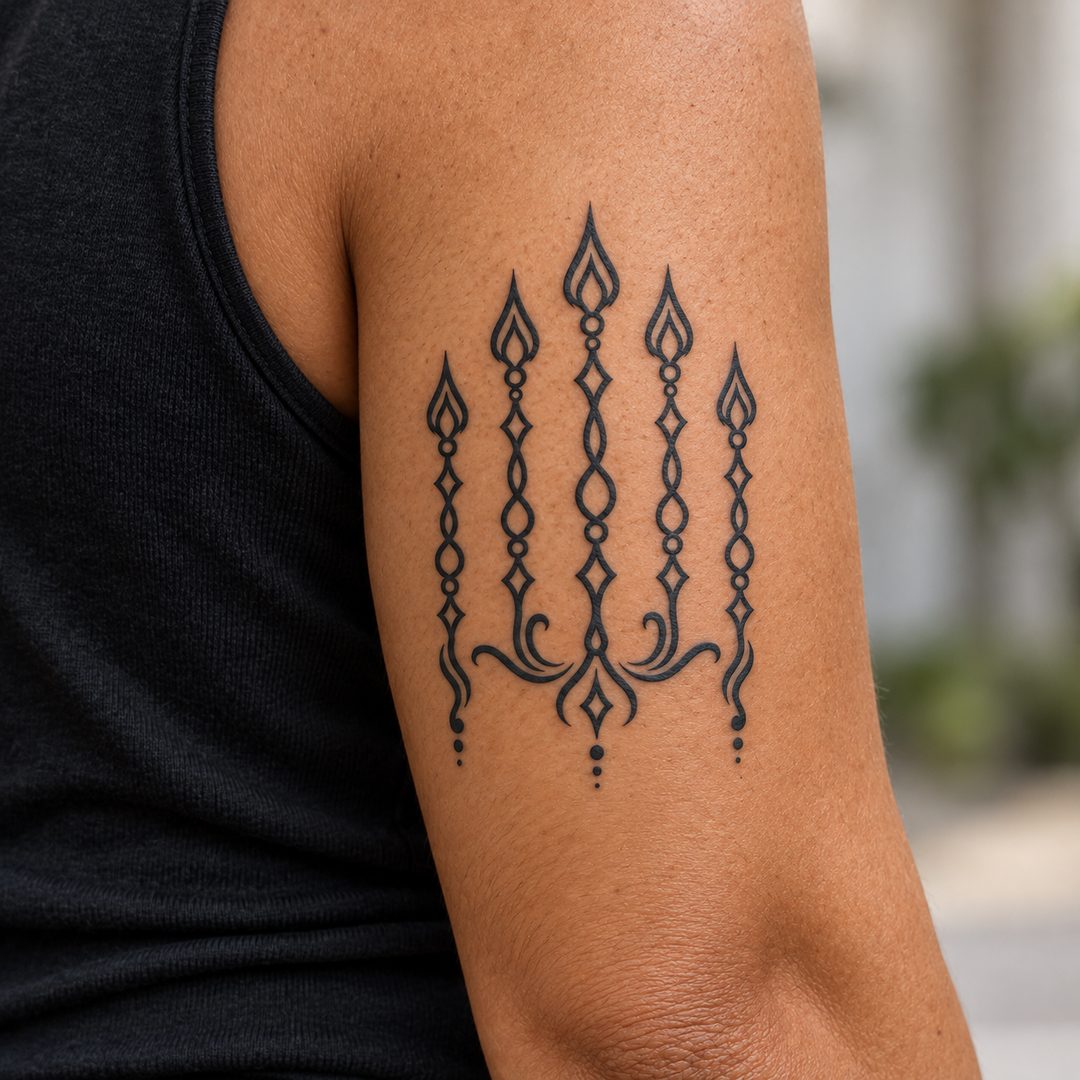
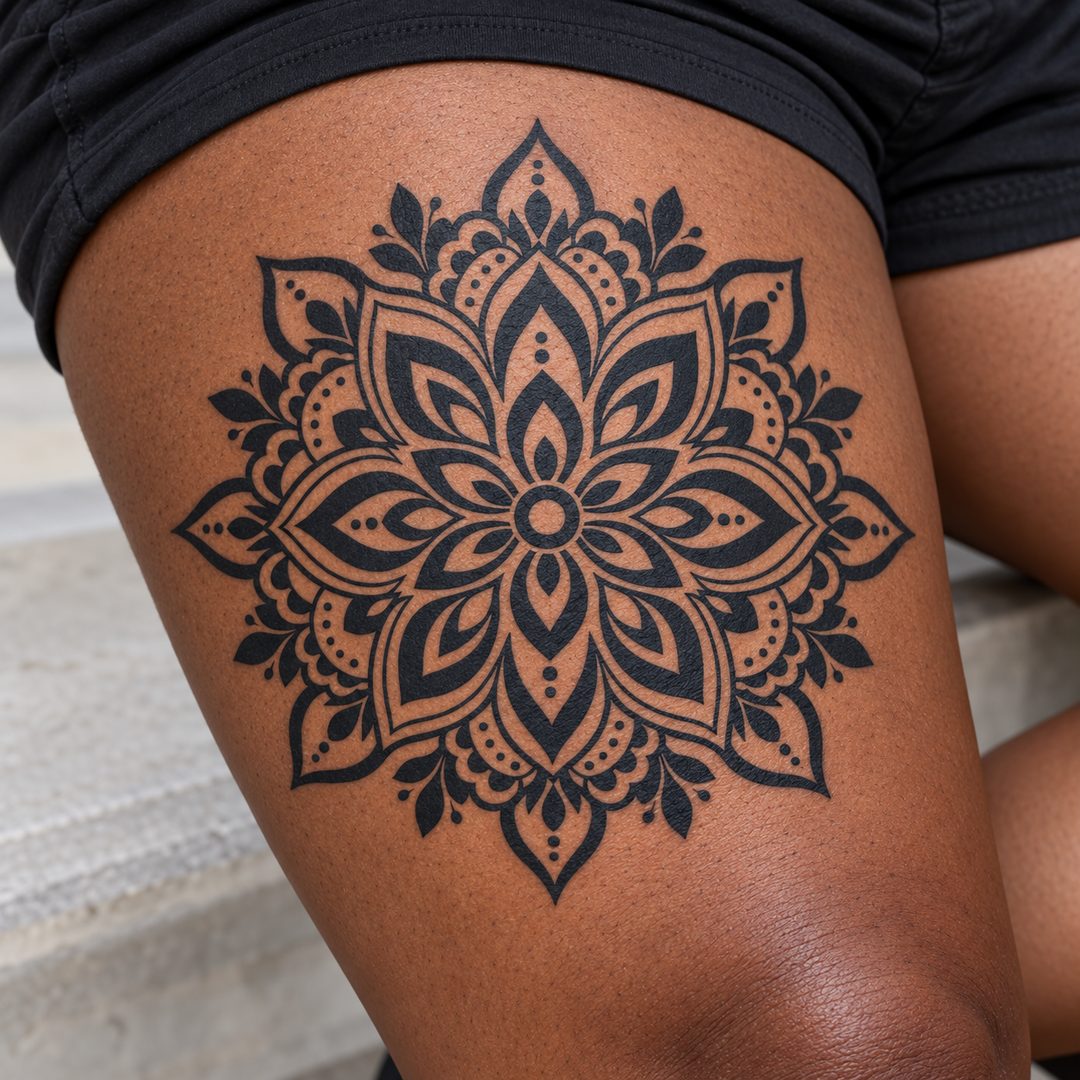
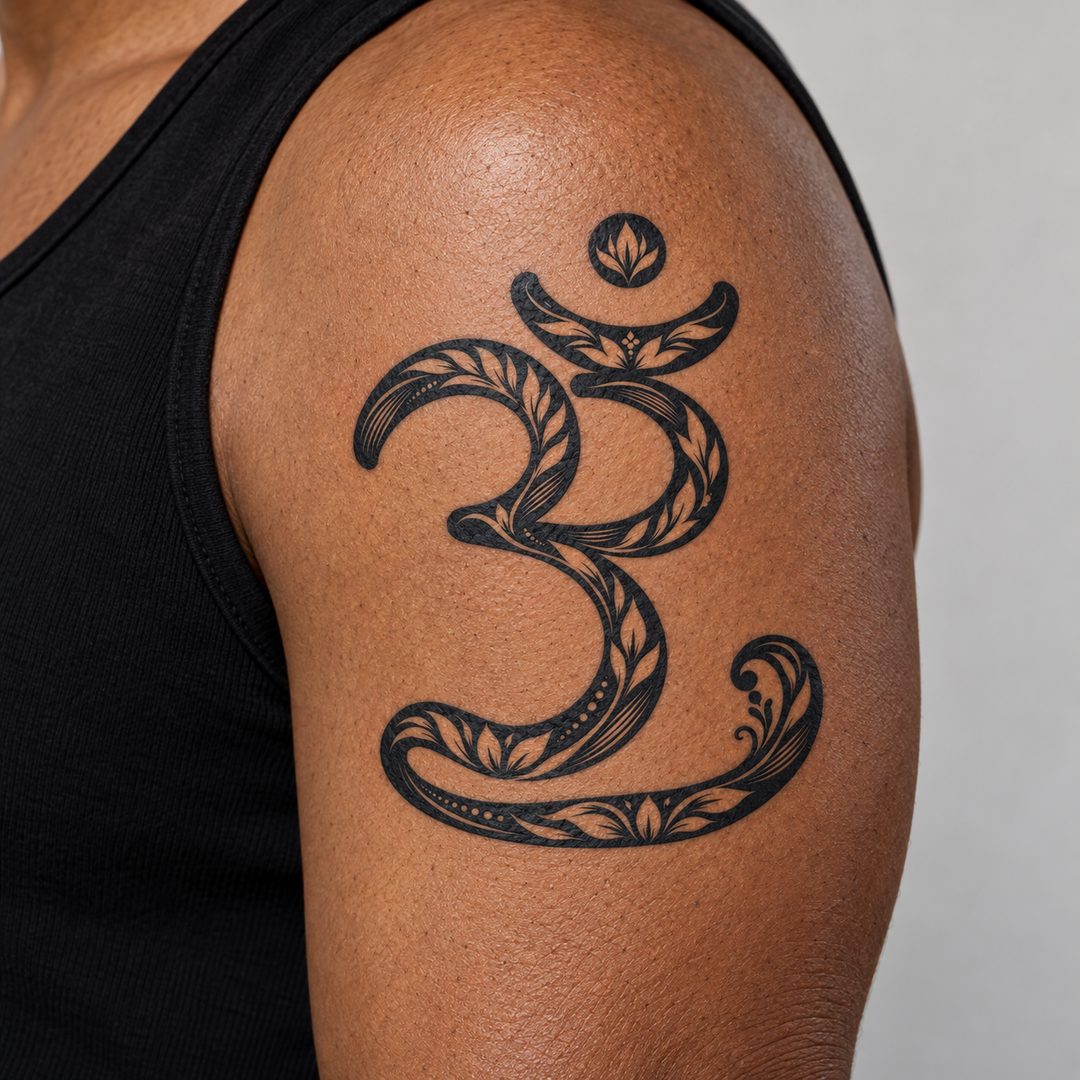
- 'Thai geometric': the look without the rite.
Best place to wear it
Upper back Top pick
Where masters place the gao yord, at the top of the spine. The highest and holiest spot.
10 to 20 cm
Pain 4/10 · heals in about 21 days
Upper arm (outer)
High on the body and easy to cover; suits a Thai-inspired geometric piece.
8 to 15 cm
Pain 3/10 · heals in about 14 days
Shoulder blade
The traditional home of the hah taew, on the left shoulder.
10 to 15 cm
Pain 4/10 · heals in about 14 days
Get it right
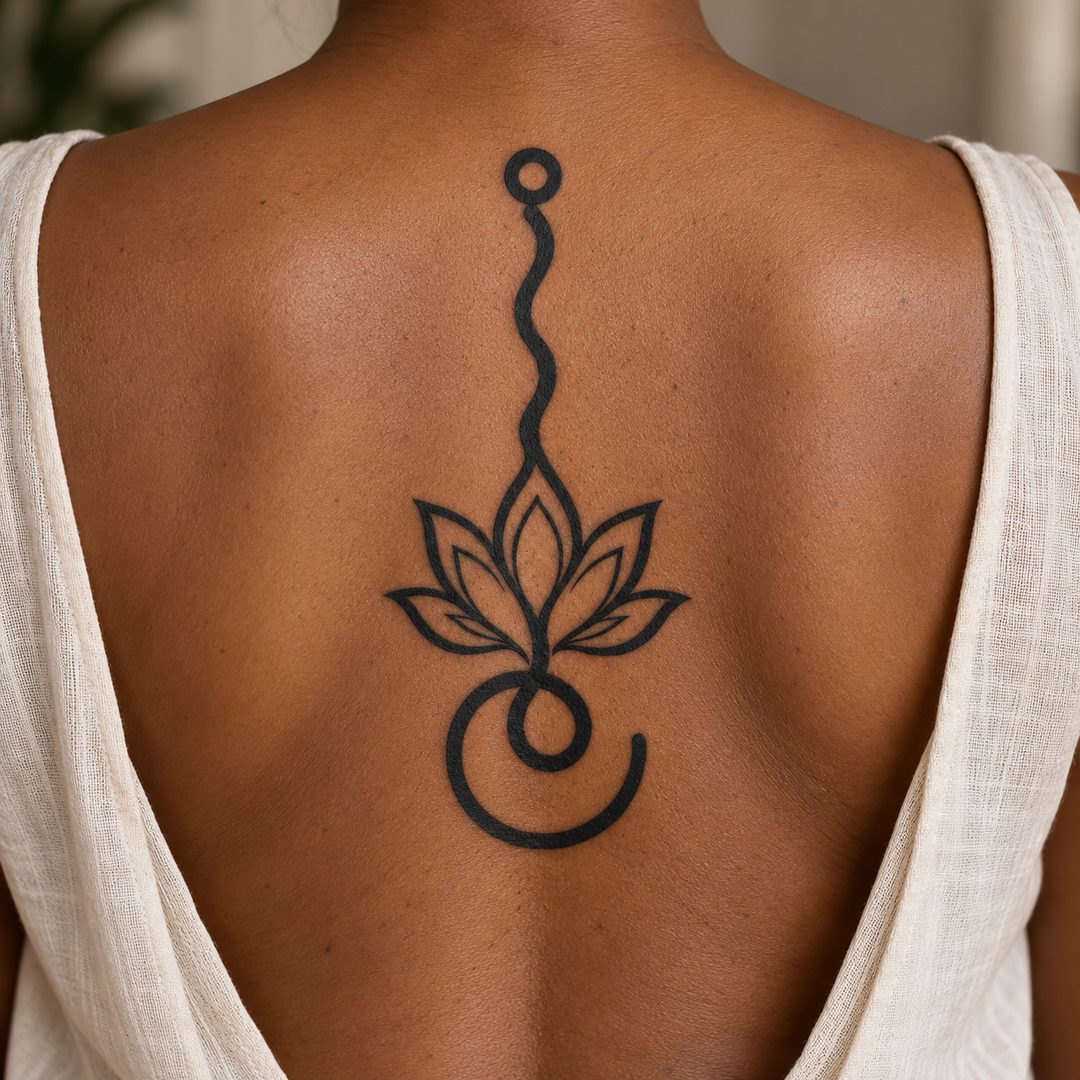
You cannot get a sak yant outside Thailand and its neighbours. You can get a tattoo of one, and the honest thing is to know which you are buying. If you want the real thing, travel: find a reputable temple or samnak, bring the customary offering, accept the master's choice of design and placement, and take the rules seriously, because that is the point. If you want the look, ask for a Thai-inspired geometric piece with no Khom script, or an unalome on its own, and call it that. Do not copy hah taew lines from the internet: the script is often garbled or meaningless, and to anyone who reads it that shows. Whatever you choose, keep it high on the body, above the waist, as the tradition does.
Styles that suit it
Related
Sources
Researched from the sources below; cultural review pending.