Star
The five-point star. Guidance, hope, and the simplest shape that means something.
The story
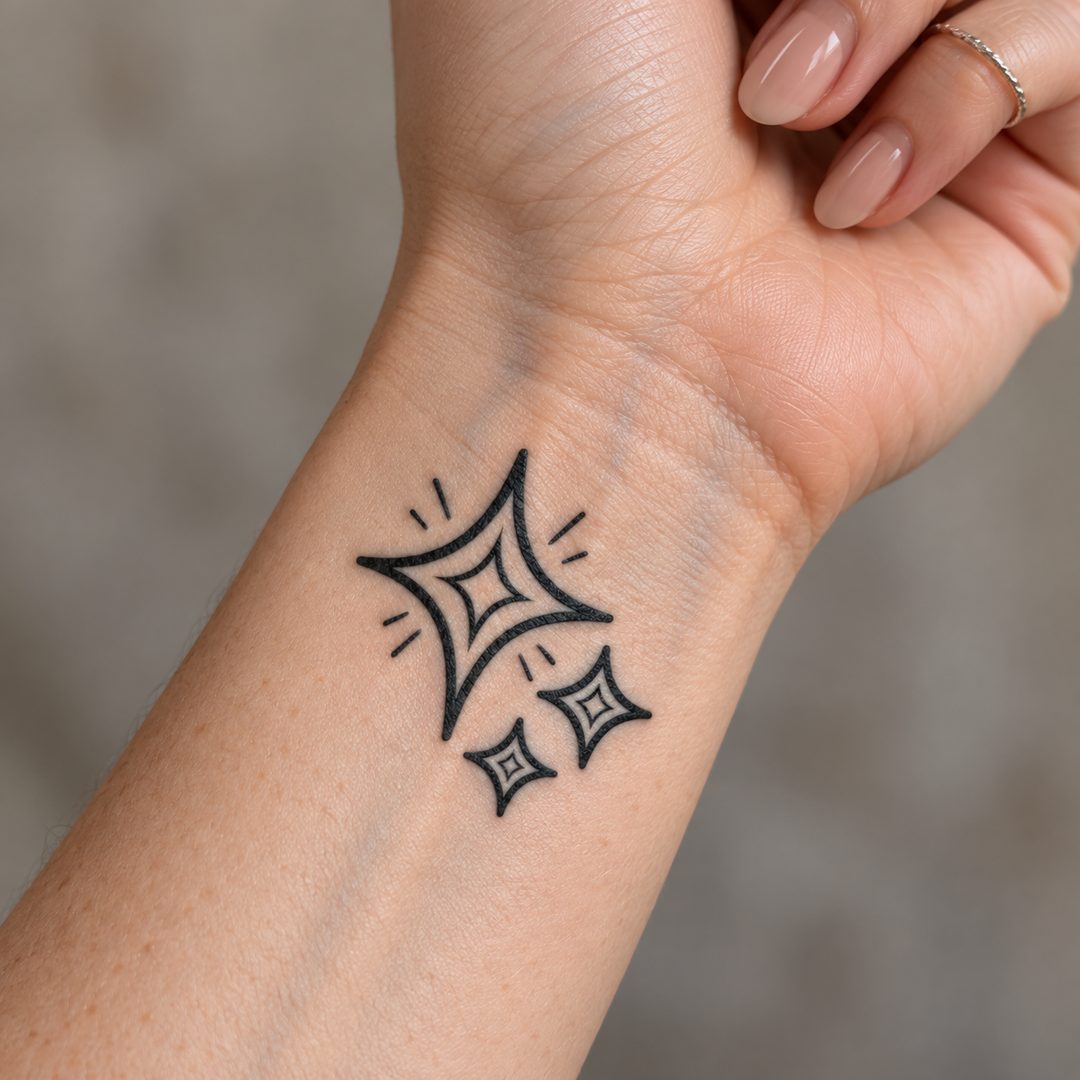
The Egyptian hieroglyph for 'star' had five points, and the shape has been drawn as a single unbroken line since antiquity. Drawn with the internal lines it is a pentagram, which has its own long history in mathematics, magic and Christian symbolism; drawn as an outline it is simply a star. The outline is the heraldic form, and it went onto flags from the American Flag Act of 1777 onward, so that today more than a third of national flags carry one. Sailors wore the nautical star for guidance, and the plain five-point star came with it, small enough to fit anywhere. It is one of the most tattooed shapes in the world, usually as an outline, a solid, or a scatter of both.
What it means
- Ancient Egypt and heraldry
- A star of the sky; rank, honour, nationhood.
- Maritime
- Guidance, finding your way home.
- Modern
- Hope, ambition, a person who lights the way.
Best place to wear it
Wrist Top pick
The classic spot for a star or a cluster. Expect a touch-up.
1 to 2.5 cm
Pain 5/10 · heals in about 14 days
Hand and fingers
A star on the side of a finger is popular and fades fastest of all. Solid only.
1 cm
Pain 7/10 · heals in about 21 days
Get it right
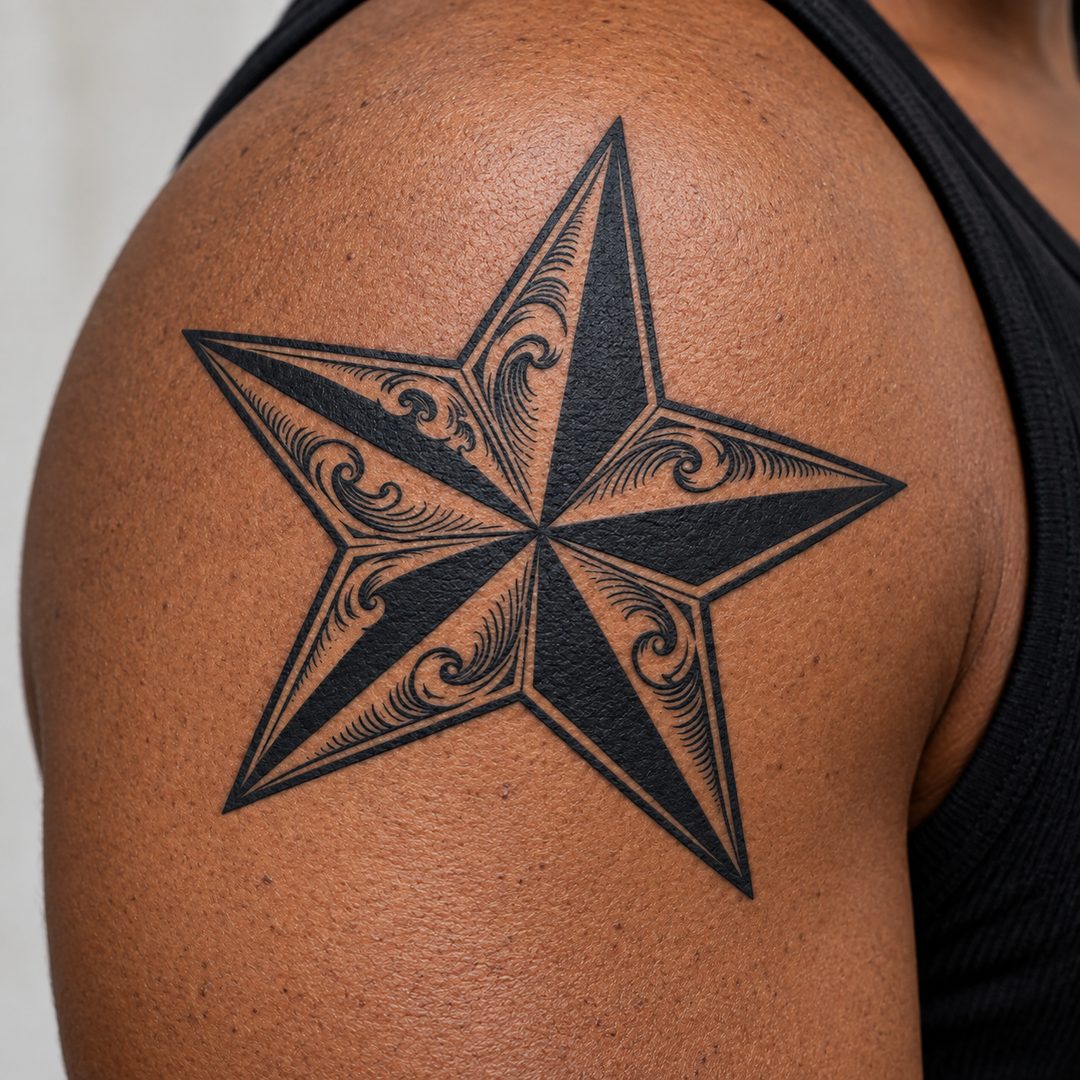
Five points, so five chances for the ink to round off. Solid black stars hold their shape better than outlines and can go down to about 1 cm; an outline needs 2 cm or more so the inner corners do not fill in. Ask the artist to draw it with a ruler or a stencil, because a slightly uneven star is very noticeable on something this plain. A scatter of stars should mix solid and outline, with the tiniest at 6 mm and solid. Decide whether you want the pentagram lines inside; that is a different symbol with a different history. If you want the sailor's version with the split shading, look at the nautical star instead.
Styles that suit it
Related
Sources
Researched from the sources below; cultural review pending.