Script Lettering
A word, a name, a line you live by. The tattoo where spelling is everything.
In the 1730s a London engraver, George Bickham, collected the best handwriting of two dozen writing masters and cut it into copper plates, page after page of looping capitals and hairline flourishes. The Universal Penman taught clerks across the Empire to write, and copperplate is still what a tattoo artist means by script. The rule has not changed since: a flourish forgives a lot, a spelling mistake nothing.
Worth knowing
The story
Writing on skin is as old as tattooing, but the flowing script most people picture comes from a specific place: the English round hand of the 1700s, taught from copybooks engraved on copper plates and so called copperplate. George Bickham's Universal Penman, published in parts from 1733 to 1741, set the standard, and its swashes and hairlines are still what a tattoo artist means by 'script'.
Tattoo lettering grew its own dialects. Sailor Jerry put names on banners under swallows and anchors. In East Los Angeles from the 1970s, Chicano artists developed fine-line script and 'Old English' blackletter into an art of their own, and that look now travels the world. Today a name on the collarbone or a short phrase down the forearm is among the most requested tattoos, and among the most regretted, almost always for reasons that were avoidable.
Lettering asks something different of you than a picture does. A rose with a slightly odd petal is still a rose. A word with a letter missing is a mistake you wear.
What it means
- Copperplate and round hand
- Elegance, formality, the hand-written promise.
- Chicano and traditional
- Names, loyalty, neighbourhood, family.
- Global modern
- A word or line that holds you: a name, a verse, a reminder.
Best place to wear it
Inner forearm Top pick
The standard for a word or short phrase; long, flat and readable.
8 to 20 cm long
Pain 3/10 · heals in about 14 days
Collarbone
A single name or word along the bone. Small script is hard here; keep it bold.
5 to 12 cm long
Pain 7/10 · heals in about 14 days
Spine
A phrase down the spine in a vertical line. Dramatic, and one of the sorer sittings.
15 to 30 cm long
Pain 8/10 · heals in about 21 days
Get it right
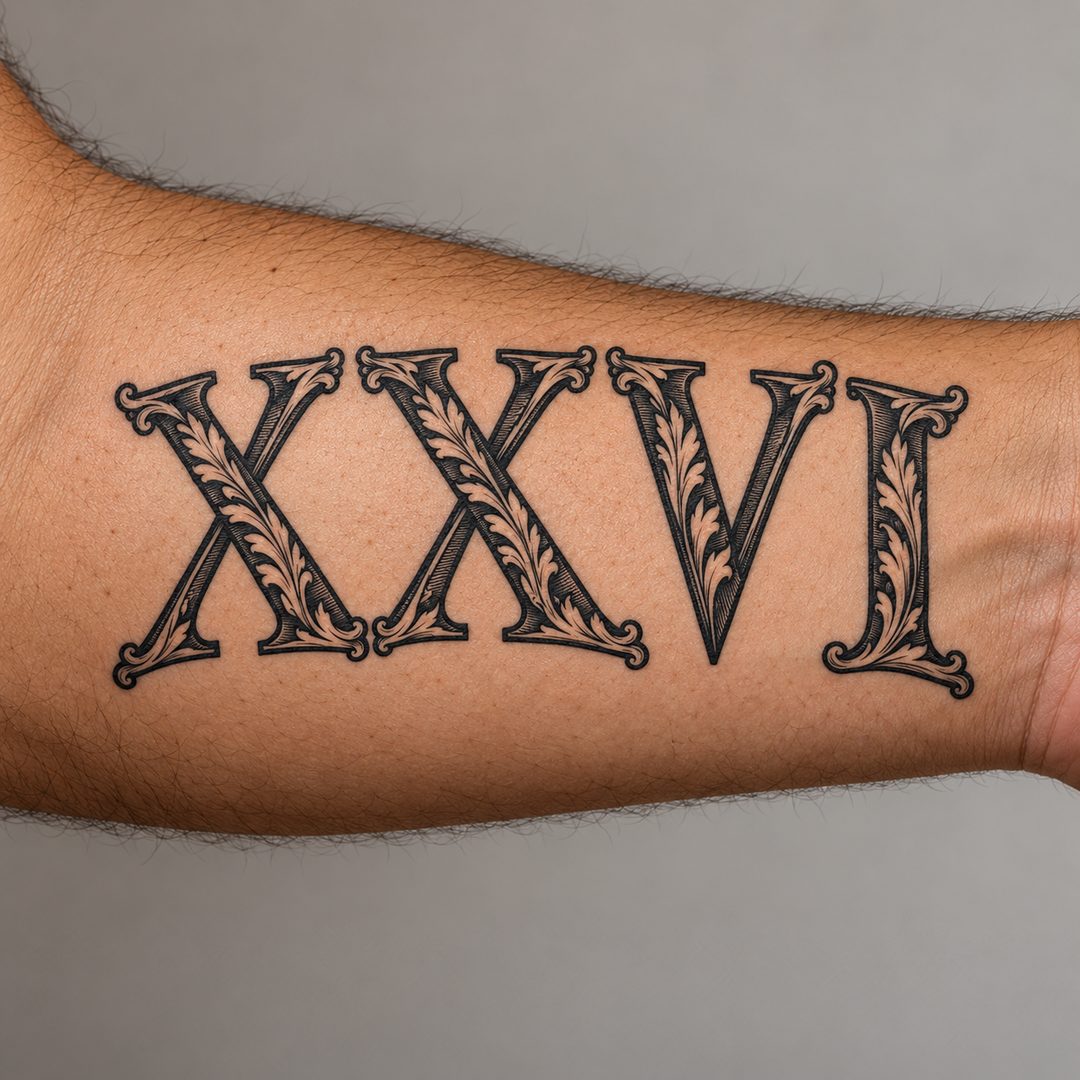
Spelling first. Write the text, have two other people read it, and read it aloud yourself. If it is in a language you do not read, Arabic, Chinese, Latin, anything, do not trust a translation app; ask a first-language speaker, ideally two, and check the grammar, not just the words. Bible verses need the right reference and a translation you actually like. Then the font: hairline scripts and tightly looped letters close up as ink spreads, so 'e', 'a' and 'o' become blobs within a few years. Go bigger than you think, ask for more space between letters, and avoid all-caps blackletter under 2 cm tall. Print the stencil at actual size, read it in a mirror and from a metre away, and only then sit down.
Styles that suit it
Related
Sources
Researched from the sources below; cultural review pending.